Woodlore

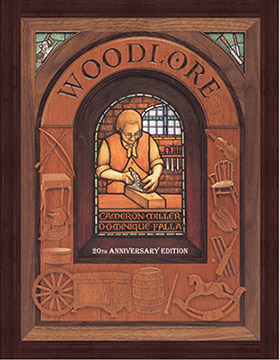
The ancient magic of the woodworker's craft is superbly conveyed in this unusual and exquisite book, which incorporates both illustration and wood carving to show the traditional uses of different kinds of timber.

CURRENTLY OUT OF PRINT

Order Now!
About the Book

KIRKUS REVIEW

An elegant and informative book about the art of woodworking, the varieties of wood, and their traditional uses. Falla’s detailed, historically accurate illustrations show busy woodworkers in various settings–in interiors and exteriors, from the 14th to the 19th centuries, from Europe to China and the U.S.–in scenes of the finished products in use. Each of these is tastefully framed with the type of wood depicted in it. The entire assemblage– picture and ornate frame–is photographed; the result is a series of icon-like compositions, each one devoted to a particular type of wood and its function. The rhymes about each type of wood–yew for longbows, maple and spruce for lutes and violins, beach for chairs, teak for decks of ship–that are printed beneath each frame are rather mediocre, but the detailed explanatory notes at the end of the book are a pleasure to read. These are full of historical information and descriptions of how the objects in the pictures are made. An original conception, masterfully realized. (Picture book/nonfiction. 5-9)

Dominique Falla did the illustrations for this book on plywood primed with gesso, using aquarelles (water-soluble pencils).
Cameron Miller framed each illustration with the actual wood described in the text, and used a variety of other timbers for the inlay work and decorations.

Details
Authors: Cameron Miller, Dominique Falla
Genres: Arts & Crafts, Children's Book, Lost Trades, Picture Book
Publisher: The Rhykane Press
Publication Year: 2014
Length: 36pp
Illustrator: Dominique Falla
ISBN: 9780992287108
Gr. 3-5. "Yew trees, / grown throughout the ages, / Have the wood / the bowyer favors." So begins a somewhat esoteric celebration of the varieties of wood and how they have been used throughout history. Each full-color illustration, meticulously framed in the type of wood or woods mentioned on the page, shows a craftsperson working with the wood or someone using the finished product. The three concluding pages contain notes to explain specialized terminology (a medieval bowyer made longbows, for example) and provide background information. An earnest, handsome book on an unusual subject, this may appeal more to adults than to children. Carolyn Phelan
– Booklist
Grade 3-6?"Yew trees,/grown throughout the ages,/have the wood/the bowyer favors." In 13 double-page spreads of such rhymed couplets and an additional three pages of text at the end, this unusual book provides historical perspectives and description of the special qualities and uses of 16 particular woods. Resembling stained-glass windows with wood grain, Falla's luminous illustrations are done on plywood primed with Gesso, using aquarelles (water-soluble pencils). Miller framed each picture with the wood described in the text and "used a variety of other timbers for the inlay work and decorations." Turning each page, one expects to feel wood, not paper. Parchmentlike endpapers feature sketches of the trees, woodworking tools, and products shown throughout. Vocabulary such as "bodgers" (itinerant wood-turners) and "falloes" (curved section of a wheel rim) are used in the couplets and explained in the textual notes at the end. The volume is slim, beautiful, and represents untold hours of exceptional craftsmanship. Unfortunately, its primary appeal may be to an adult woodworker, especially one with an interest in history. While this title could possibly be used to support an interdisciplinary approach integrating subjects such as industrial technology, social studies, art, and English, it seems more likely to languish on the shelves of an elementary school library. Still, it's a visual feast.?Joel Shoemaker, Southeast Jr. High School, Iowa City, IA Copyright 1995 Reed Business Information, Inc.
– School Library Journal
Cameron Miller

Cameron is a well-known tool historian, collector and toolmaker, specialising in infill hand planes made famous by makers such as Stewart Spiers and Thomas Norris He has written several books on tool manufacturers, along with various introductions to other books, catalogue reproductions and articles. Cameron studied furniture design at Box Hill College in Melbourne and made hand-crafted guitars for Maton Guitars, before starting his own instrument making business.

Disclosure of Material Connection: Some of the links in the page above are "affiliate links." This means if you click on the link and purchase the item, I will receive an affiliate commission. I am disclosing this in accordance with the Federal Trade Commission's 16 CFR, Part 255: "Guides Concerning the Use of Endorsements and Testimonials in Advertising."